Showing posts with label handmade jewelry. Show all posts

Wednesday, June 6, 2007

Designer Handcrafted Jewelry: From Idea to Reality


Design Sources


People visiting galleries, art shows or boutiques often wonder how designer handcrafted jewelry is created. They often ask, "Where do jewelry designs come from?" or "How does the artist design this jewelry?" In fact, many artists cannot tell you exactly where designs come from, but they can share how they go about designing jewelry. There are as many different approaches to creating designer handcrafted jewelry as there are artists working. Some artists have a predetermined style or a "branded look" with specific stone combinations or techniques that give a starting point for their designs. Other artists create commissioned pieces where the design marries the specific needs of the client with the specifics of an existing piece of jewelry. Perhaps the most challenging for artists is to start a design from scratch. Luckily, most artists will say that inspiration is all around them, all the time. They simply have to be aware of the visual resources around them every day. Whether it is the exquisite colors of tropical lizards, the wavy wrapping of a bird's nest, the mechanics of a doorbell or shaped and patterned seashells, the rhythm, color and patterns usually spark creativity and the beginning of new designs. Even when artists use similar design sources, that does not mean they will produce the same jewelry product. Two artists using a butterfly theme or motif as their inspiration will generate two quite different jewelry solutions. A butterfly theme may become a brooch encrusted with colorful, faceted gemstones or it may be created from fine silver, then hammered to create relief and patinated with chemicals to create a dark, rich metallic surface. That is why designer handcrafted jewelry is so intriguing.

Design Elements


Looking at the finished product, people often wonder how artists know if a piece has good design. How do artists decide what designs to use? Line, shape, color and texture are basics that most artists consider when designing jewelry. They also consider whether the piece has contrast, balance, symmetry/asymmetry, a focal point, and proportion. Sometimes the void or the space not filled up, called negative space, is the most important aspect of a design. Artists usually view the piece from many different angles, even upside down, to more easily analyze and isolate the different design strengths or weaknesses. Whether a piece conveys a feeling or mood or how well it functions is also considered at this design stage. Necklaces that are imbalanced, clasps that are uncomfortable on the neck, rings that are too thick between the fingers are issues that artists must resolve when designing. And of course, there are many different techniques and jewelry processes that can also determine the overall look and feel of jewelry. Forged metal may focus more on line and movement but not color. Texture can be created through hammering or milling. Relief can be created through repousse work or granulation. To create dynamic pieces of jewelry, the piece will have good flow and cause the eye to move all around it. To discover the best of many alternatives, designers have to explore or at least be aware of all the options open to them and then select those that will create the most interesting and beautiful piece.

Fingerprints


The best designer handcrafted jewelry is "fingerprinted"; that is, it bears the mark, the unique look and feel of the artist who created it. As jewelry designers focus their artistic techniques and hone their eye to visual themes, they will develop a completely individual style or "brand" that can often be identified by others. This is the goal toward which designers strive. Sometimes what begins as a mistake, a torch melts the edge of silver, or a patina goes darker than expected, can be a point of departure for an artist who wants to develop this branded look. That which was a "mistake" can become a new method of working with a particular media and then, in turn, become a distinguishing look of the artist's pieces. Todd Reed was one of the first to use unfaceted, rough diamonds in his work. Charles Lewton-Brain was one of the first to develop the techniques and unique look of fold-formed silver as a metalworking technique. Many well-respected jewelry artists today, who exhibit their work in fine galleries or sell their jewelry in fine craft shows, have one or two distinguishing elements to their work.

All designs of true jewelry artists are original, not just copied from something or someone else. By understanding and using the elements of design, the artists can purposefully change their original inspiration or starting point into a totally new creation. There are no real design "rules". Designer handcrafted jewelry is attractive and timeless because the artist who creates it has successfully used visual resources together with highly skilled techniques to create the one of a kind or limited edition pieces for which they are known.




Saturday, May 19, 2007

Art Jewelry ~ The Eye and the Hand of the Artist


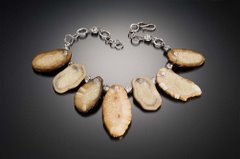
Today there is resurgence in handcrafted art jewelry--artist made jewelry that is created by hand instead of mechanically produced by machine.


Made to 'Perfection'


Mass-produced jewelry often looks more uniform and sometimes lacks the variation that speaks of the hand and eye of the individual artist. Machine made jewelry is produced using pattern and perfect repetition with the focus primarily on profitability. Even though mass-produced jewelry may appear as handmade, that does not mean it was actually handcrafted. Even though mass-produced jewelry of common styles is sometimes less expensive, because less expensive to make, it is not always so. Mass-produced jewelry rarely has special meaning or a history attached to it--it does not have a story or a bit of the maker's life embedded into it.

Handcrafted Jewelry

While machine made jewelry is produced from patterns and consistent repetition, the charm of handmade art jewelry is its variation from similar, but not identically same pieces. Art jewelry shows the creativity, concentration, time, skill and dedication required of the artist to create his/her original. Artists and designers making art jewelry use old metal smith skills, simple tools and a variety of age-old techniques to create new, intriguing forms and shapes. In addition to the craftsmanship involved, art jewelry often speaks or refers to the individuality and personal meaning of the artist as well as their cultural identity and personal themes.

Love and Passion

Handmade jewelry offers the pleasure of unique, often rare designs that are not identical and are created with great love and passion. Art jewelry designers often use natural, high quality materials such as precious metals, precious and natural gemstones, antique components and organic elements such as coral, leather, wood, bone, amber and pearls. They go to great lengths to design unusual, unexpected combinations of shapes, forms, colors and combinations of materials.
Many art jewelers today, have a 'branded' look to their work. The brand may be recognized by the specific collection of materials used, by a highly developed approach to design or to an interesting or unusual technique. Each artist attaches their name to the work and is proud of the reputation they have. For jewelry artists, the creation of new jewelry is a passionate aspect of their life. They enjoy every minute of their work, whether working as the designer or the fabricator or the seller sharing their story with others.

An Art Form

Jewelry is an art form. Painters and sculptors embed their artwork with great strength of feeling that comes through their design process and the finished work. In the same way, art jewelry often reflects the personal touch and style and expresses the individuality and interests of the artist creating it. Many jewelry artists have training in art and design, although others are self-taught. These artists commonly speak about the fascination they have always had in working with their hands. They talk about linking their soul, mind and body together in the process of conceiving a new idea and then creating something new and exciting. Jewelry artists often say that they play with the materials in an imaginary space and then see the materials evolve and transform into components which become in turn, a new form of jewelry. Artists also talk about the silent conversations they have with themselves as new ideas begin to flow and come together for the new piece. They are dedicated to their artistic way of life.

Handmade jewelry is not usually available in large quantities. The attention to craftsmanship and detail is a hallmark of high quality art jewelry. Wearing beautiful handmade jewelry is such a pleasure that it is worth discovering it through galleries or art shows. Sharing and explaining to others the history and information about the jewelry or the story of the artist creator, is a great joy. It is satisfying to wear jewelry that a person has personally and lovingly created with the use of their eyes and hands.

Beads as Ornamentation ~ The Earliest ‘Bling’

I have been fascinated with the study of mankind and ancient beads. Apparently, human desire to create has been present for thousands of years. Personal ornament, along with art, has been integral to the development of human beings.

The Earliest 'Bling'

Some of the earliest ornaments were seashell beads; for example, beads from South Africa have been analyzed and dated from 75,000 years ago. More recent discoveries by scientists have found even older beads. As reported in National Geographic, these seashell beads were excavated from sites in Israel and Algeria and date from 100,000 to 135,000 years ago. Remoteness from the seashore indicates that there was a deliberate selection and transportation by humans of these shells for symbolic use and personal ornamentation. Personal ornaments have many different and multiple functions. They may used to beautify the body, function as ‘love letters’ in courtship or as amulets that express individual or group identity.

Symbols

Beyond meeting the need for food and survival, these earliest humans were living as social beings and constructing ideas and beliefs surrounding their ‘found objects’. These beads are archaeological proof that mankind has had an ability to think symbolically and creatively from its ancient beginnings. Specialists in the study of cultural diversity agree that these early beads indicate that humans had an ability to assign symbolic meaning to objects and to construct social conventions or traditions around them. Whether the beads were used in gift-giving systems in order to strengthen social and economic relationships or whether the beads were used as markers of ethnic, social and personal identity, there is no doubt that these early ‘expressions’ were intentional and creative uses of ‘found materials’.

Evolving Jewelry Styles

Besides the earliest shell beads, which survived weather and time, men and women have adorned themselves with other handmade decorations such as garlands of flowers, bracelets of woven grass, and stone beads. These were the first decorations to beautify the human body. Over the centuries, jewelry styles and materials have evolved in step with the advances of civilization. From the Stone Age to the Bronze Age, from the Iron Age to the Industrial Revolution, designs and materials have transformed, modernized, and then often returned to their most basic forms and essential elements.

Jewelry Today

Today, the majority of jewelry products are machine made, allowing manufacturers to produce uniform jewelry designs much more economically than traditional handcrafting and hand-casting techniques allow. Even complex jewelry designs can be produced with speed and uniformity. The manufacturing helps ensure the production of a consistent and highly profitable product.

However, in the past few decades, the modern marketplace has experienced a new interest in handmade jewelry and a greater value is being placed on limited edition and one of a kind art jewelry designs. These pieces of art jewelry are designed by artists, are made by hand and often utilized ancient crafting processes. With this renewed interest in the art and craft of jewelry, many jewelry artists around the world and enjoying recognition for the talent and skills. There are many specialty galleries that feature an array of handmade jewelry. The Internet facilitates the advent and spread of art jewelry sales globally. Recognizing the eye of the artist and the power and energy of handmade objects, brings us back to our roots—our desire for individuality, beauty, and love.


Circle of Life

In my opinion, a significant hope for the peaceful outcome of our future, lies in this most basic of truths—that men and women are thinking beings and that they desire to create beauty both for themselves and for others. There is abundant evidence that human beings have been ‘human’ for thousands of years. Recognizing our continuity with our ancient ancestors may be our best hope for rediscovering true sources of compassion, serenity and hope.

The human soul is hungry for beauty; we seek it everywhere—in landscape, music art, clothes, furniture, gardening, companionship, love, religion and in ourselves. No one would desire not to be beautiful. When we experience the Beautiful, there is a sense of homecoming.

John O’Donohue
The Invisible Embrace: Beauty

Thursday, May 10, 2007

Common Is Beautiful ~ Poppy, Picasso and Paintbrush Jasper Gemstones


Picture Jaspers

If you were walking on the desert or hiking in the foothills, what would you do if you came across and amazing stone that had large yellow and red spots that reminded you of your garden poppies at home? You would probably want to name the stone “Poppy Jasper”. That’s what rock hound enthusiasts have done for years. The names Poppy, Picasso Marble, Dalmatian, Paintbrush, Rain Forest and Leopard Skin are all names that describe the large group of jasper know commonly as “Picture Jaspers”. Dalmatian Jasper is white with black spots while Leopard Skin Jasper is beige/pink with spots of black and yellow, resembling Leopard Skin.

Picture Jaspers have amazing colorations and designs. Jaspers are found in colors including red, brown, pink, yellow, green and shades of blue and purple. The organic material and mineral oxides in Jasper create interesting patterns. Because of the foreign materials, jasper is rarely uniform in color but commonly multicolored, striped or spotted, bands and colors. Many of the patterns resemble landscapes with mountain and valleys, so the name “picture” is part of the name of many well-known jaspers. One of these famous jaspers is Morgan Hill Poppy Jasper. It is jasper with red and yellow dots that resemble poppy flowers. Technically, it is brecciated jasper, meaning that it came from sun-dried and oxidized iron-rich clay; the cracks were then later filled in by other substances.

Place Name Jaspers

Although jaspers are found worldwide, a wide variety of named jaspers are found in the western areas of the United States. California, Oregon, Idaho, Utah, Wyoming and Washington are well known for the place name jaspers such as Stone Canyon Jasper with its mustard yellow base and cream and purple banding. Others are Willow Creek, Owyhee, and Deschutes Jasper. Other popular jaspers are found in Germany, India, Russia, Pakistan, France and the USA as well as many other countries

Magical and Therapeutic Jasper

Jaspers have been to about every culture known to man. Many of these cultures have attributed magical powers to Jasper. Native Americans believe that jasper brings rain and in fact, the word for Jasper in some Native American cultures meant “rain-bringer”. Jasper was also used in Ancient European times as a "rain bringer".

Natural healers consider jasper useful as on overall healing gemstone. Wearing jasper was believed to provide protection, have a calming effect and give stability and security. It is thought to balance one’s physical, emotional and intellectual states.

In folklore, Poppy Jasper is thought to function like adrenaline, waking up and energizing areas of the body that appear to be sleeping. It is believed to encourage a deep connection with the life of the Earth. It inspires a positive, joyful attitude and gives the motivation and energy to take creative action. To natural healers, poppy jasper is a gemstone that was broken and healed. They consider this a very useful gem to help with blood disorders and heart problems. Poppy Jasper is also thought to enhance strength and willpower.

Storytelling

The folklore and cultural history surrounding Jaspers adds to the beauty of these amazing stones. Picture Jaspers could certainly inspire creative story telling and belief in their curative properties. Their beauty can be explained in geologic terms, but their colorful designs inspire and ask for more creative explanations. Jewelry designers often utilize the beauty of nature with its abundant color, pattern, shapes and forms, as original sources of inspiration. When visualizing new designs, artists will often create a "story" or a theme that helps to bring forward the passion or inspiration for a specific piece of jewelry. Then the piece is not just a necklace or bracelet but adornment to enhance the wearer.


Thursday, May 3, 2007

Turquoise Jewelry ~ What the World Creates by Hand

The beautiful gemstone, turquoise, has been a favorite throughout the world for centuries. The gem has been used both for its beauty and for the powers it may bestow. It has been prized for its protection from the hazards of life, its connection with deities or its healing properties and whether for artistic, health or religious purposes, an abundance of exquisite ornaments have been produced for more than 1000 years. Turquoise jewelry designs are varied, most often with silver as inlay or with repousse (relief silver). These adornments are unique, powerful and timeless testaments to mankind’s ingenuity and creativity. Turquoise has for centuries, and still is, a prized choice for high quality jewelry.

World Traditions ~ Turquoise Jewelry

Turquoise jewelry is considered a good gift because historically the turquoise is thought to bring wealth to the wearer. These powerful talismans of wealth and protection historically have decorated everything from swords to clothing to horse's bridles. The word turquoise means “Turkish Stone” since the stones were first brought to Europe from mines in Turkey. Traditionally, turquoise is well known for its protective qualities and many cultures carry a turquoise stone with them at all times. Whether strung on beads, carved into animal fetishes, or combined with other stones such as onyx, amethyst, or coral, the brilliant sky blue/green of turquoise has been prized around the globe over the centuries.

Jewelry has traditionally been an important part of Tibetan daily dress. It is believed that jewels put people in touch with deities, and protect them from the many hazards of life. Turquoise and coral are considered gifts from the gods, are desired as a sign of the auspicious and are praised as a sacred talisman. The endless knot diagram that surrounds the turquoise in Tibetan pendant symbolizes devotion.

Turquoise Gemstones ~ What to Buy

Turquoise is a form of hydrated copper aluminum phosphate mineral and has been valued as a gemstone for thousands of years. The best quality turquoise comes from the Southwestern United States, Mexico, Israel, Afghanistan and China. However, some jewelry experts would maintain that the stones with the truest sky blue color come from Northern Iran.

When buying turquoise jewelry it is best to buy it in a setting that will protect the gemstone. This is because turquoise is one of the softer gemstones, with a rating of MOH of 6 on the hardness scale and it can easily be damaged if it suffers a hard impact. The fact that it is so fragile makes it difficult to cut it into facets without breaking. That is why they are usually sold as turquoise beads or cabochons.

Turquoise Healing Properties

Turquoise has also been used for healing. Whether for healing physical problems such as headaches or eye problems or for spiritual healing such as alleviating stress and nervousness, help with problem solving or promoting friendship, turquoise is regarded by many as a beneficial aid. In new age philosophies, turquoise is a symbol of rapid favorable change. It is worn to dissolve prosperity blocks, connect one to his or her higher self and to cure depression. The stone also instills loyalty in partnerships while at the same time dispelling negative emotions such as resentment, possessiveness or jealousy. It is also a symbol of an imaginative and creative mind that is not afraid to explore new ideas.

Turquoise Jewelry Today

Today, turquoise jewelry makes an especially thoughtful gift. Who wouldn’t want to share this handmade, jewelry tradition and the special magic and healing properties of turquoise with cherished family members and friends.

Tibetan turquoise and repoussé silver jewelry can be viewed at Urban Organic Designs.

Wednesday, May 2, 2007

Thunder Eggs and Lapidary Roots

As a jewelry designer, selecting top quality gems, cabochons and beads for jewelry designs is an exciting process. I often talk with the “middle men”, the vendors who obtain these beautiful components. But I also have reverence for all those who have mined, sorted, cleaned, rough cut and then polished exquisite gemstones before I select them for a design.

I have often thought that to be “authentic” (a descriptor for my favorite people), one must walk the talk. To really understand the journey and history of any gemstone, a designer should at least once, search for gemstones in dusty places, cut with diamond saws, and use lapidary polishing equipment to get a behind the scenes look at what it takes to produce jewelry-ready gemstones.

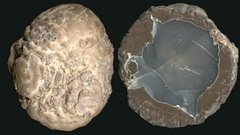
I have been attending a lapidary seminar to extend my “front line” knowledge of this part of the jewelry world. Last night involved cutting and polishing a “Thunder Egg”. Though I will not be able to use this stone for jewelry, I enjoyed the opportunity to tap into my natural “roots”, even though I am an urban dweller.

Because it is such a delightful story, here is how the famous “Thunder Eggs” of Oregon came into being. According to ancient Native American legend, when the Thunder Spirits living in the highest recesses of snowcapped Mount Hood and Mount Jefferson became angry with one another, amid violent thunder and lightning storms they would hurl masses of these spherical rocks at each other. The hostile gods obtained these weapons by stealing eggs from the Thunderbirds' nests, thus the source of the name "Thundereggs."

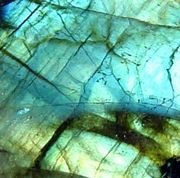
A Thunder Egg is like a filled geode, the outside is often Rhyolite and the inside an Agate. Well this week Thunder Eggs, maybe next week I will move on to Amazonite, Labradorite, or even Amethyst. Though my primary work is design and fabrication of silver which incorporates gemstones, I am thoroughly enjoying this trip behind the scenes.

Tuesday, April 17, 2007

Wear the Wealth ~ Create A New Accessory

Jewelry Design Now

Jewelry designs now are wonderfully diverse and creative. From dainty feminine to bold and assertive, jewelry designs have switched up the volume. But whether you choose Swarovski crystals or hammered silver and turquoise, well-designed jewelry can be expensive. While it is fun to go to art fairs and scope out art jewelry, sometimes you can create your own new, distinctly feminine look by looking through your own jewelry box with fresh eyes.

Stacked Bracelets and Necklaces


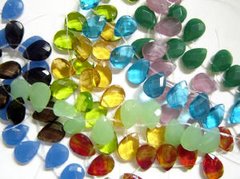
Try playing with your bracelets first. You can create a layered look in more than one way. Several bracelets with complementary color, materials or themes can be worn together. You can create a “luxe” look by layering chain bracelets with teardrop crystals or gemstones. Or…be daring and stack bangles or single strand bracelets from your wrist to mid-forearm. And of course, you can always take a beaded necklace and wrap it around your wrist for a rich, feminine look too. Consider layering your necklaces too. Many jewelry designers have created pieces of jewelry that already incorporate the layered look with multi-strands and twisted “torsades”. You can put together your own expressive form of this look. Try putting “unexpected” elements together. You can add a dash of bold color with other more earthy tones. Add a touch of sparkle and light of crystals with natural materials such as wood or shell pieces.

Themes and Stories

When I design new art jewelry pieces, I often get a theme in mind. For instance, I recently found some international postage stamps that were cased in sterling silver. There were doves, angels, and ships in the stamp designs. I had some older, Mother of Pearl, turquoise and silver chain necklaces that were a bit dated. Putting them together, I created a new collection around a new theme “The Sands of Time”. The collection is wonderfully beachy and tells a story too. You can do much the same thing by putting together unexpected combinations with a common theme. They will tell a new story...about you!

It’s fun to experiment and though it can sometimes feel like you’re in grandma’s attic doing the “dress up” thing…you may just come up with a new look AND a new you! You can find one of a kind jewelry and more jewelry information at UrbanOrganicDesigns.

Carol

Welcome to Urban Organic Designs!

Welcome to Urban Organic Designs! I am excited to share this space with you. I plan to dialogue about art jewelry designing, will share photos of interesting designs and will gather new, creative ideas. I am a jewelry designer who works in precious metals, stones and crystals such as Turquoise, Amethyst, Peridot, and Citrine. I will be sharing my my own creative processes and my thoughts about art jewelry designing, fabricating and forging metal, and designing wax for metal casting plus information on ornament and adornment.

You might wonder about the title Urban Organic Designs. Several years ago, when brainstorming we tried unexpected combinations and came up with Urban Organic. It speaks about bringing the natural world of gemstones and the designs nature provides, to urban environments. Our jewelry designs speak about the instinct we all have to be "for" and "of" nature.

So...welcome to our site and hope you visit often. I look forward to sharing my journey with you.

Carol